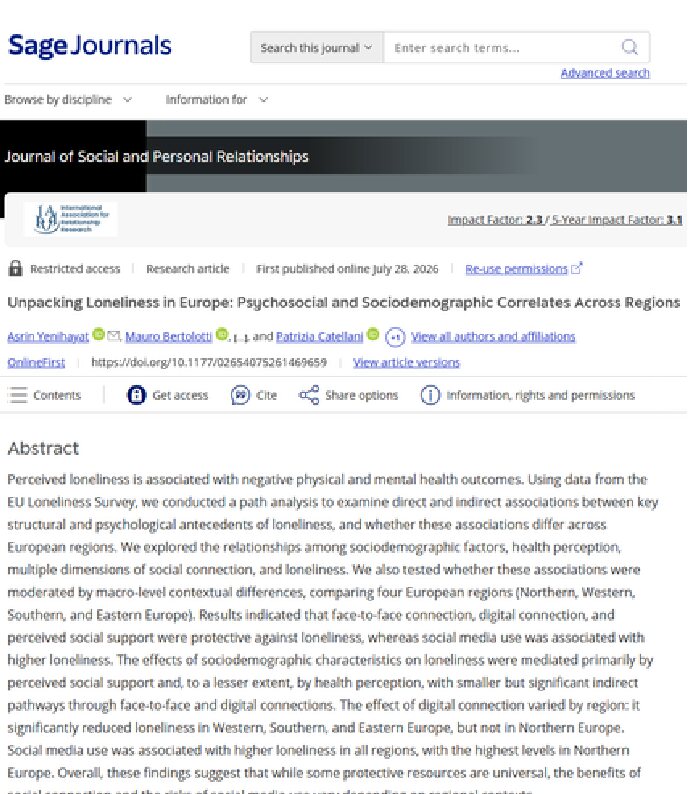
In 2022, the JRC’s EU-wide loneliness survey and the Meta-Gallup State of Social Connection study both measured loneliness in representative samples. In some countries their rates differed by as much as 8 percentage points. In a Psychology Today post, Hans Rocha IJzerman asks how that can happen.
Part of the answer is that different tools capture different experiences. When a single question and a multi-item scale are given to the same people, the two can correlate as weakly as 0.27. IJzerman compares the situation to the centuries it took to build reliable thermometers. He also notes that many psychological measures come with little or no validity evidence. Interviews by his team turned up forms of loneliness that standard measures rarely pick up, such as feeling disconnected from oneself.
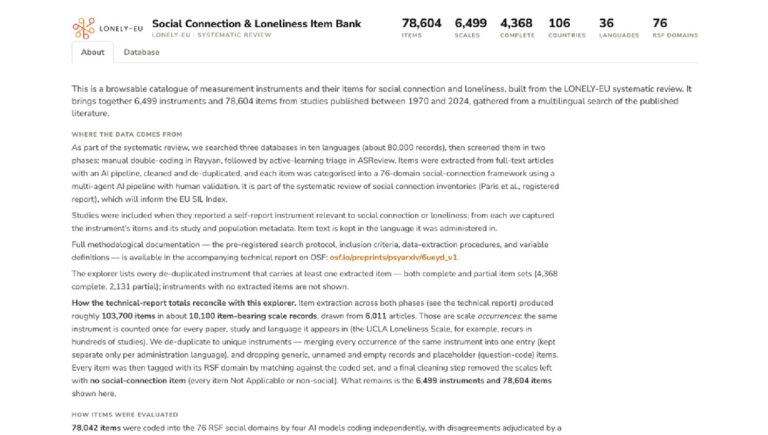
He asks readers to treat loneliness figures with humility. The post describes LONELY-EU, in which the Annecy Behavioral Science Lab works with partners across Europe on a monitoring framework for social isolation and loneliness in the EU. The goal is measurement tools that are validated and comparable across countries, yet flexible. The post summarises a longer piece written with Sharanya Mosalakanti and Ivan Ropovik.