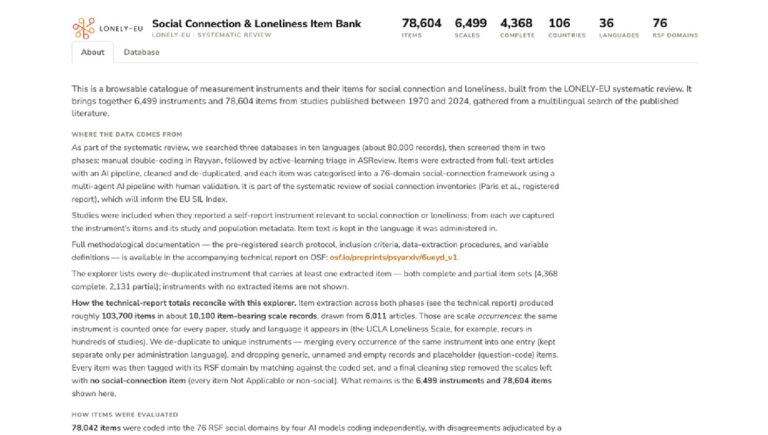
Two reports published in 2025 put loneliness among US adults at about 41 percent and about 61 percent. In a new Psychology Today post, Hans Rocha IJzerman uses that gap to ask what loneliness figures actually track.
He draws on two LONELY-EU policy briefs. The team evaluated the major loneliness questionnaires with data from more than 25,000 people in all 27 EU member states. Only the Three-Item UCLA Loneliness Scale could be compared across every country, and it mostly picks up the painful feeling of loneliness. The De Jong Gierveld Scale covers more ground, but its scores were comparable in just 5 of the 27 countries. The single question on how often people feel lonely failed validity checks in eight countries.
The post also explains the project’s traffic light rating system, which scores each measure on comparability, validity, and content coverage. No measure earned green on all three. IJzerman closes with the EU SIL Index that the project is developing. Europe will also need coordinated data collection and quality checks to use it well, he argues.