In 2022, two large European surveys asked the same loneliness question in all 27 EU member states and still produced different prevalence rates. Hans Rocha IJzerman opens his latest Psychology Today post with that puzzle, then turns to the newest LONELY-EU policy brief.
The brief builds on a systematic review that the Annecy Behavioral Science Lab ran with Ruhr University Bochum. The team screened 9,032 articles and found 2,720 different tools for measuring social connection. About a third of the development work took place in the United States, and only 18.7% involved an EU member state. Among tools with a clear age band, 4.7% focused on adults aged 65 and older. Tools that share a label also share little content. On average, two tools in the same category have between 9.4% and 20.1% of their content in common.
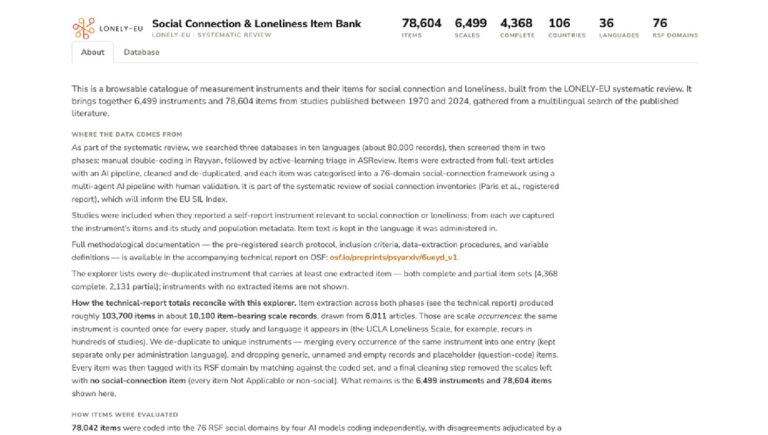
IJzerman argues that governments need monitoring that shows which form of connection people lack and where. He describes the EU Social Isolation and Loneliness Index the project is building, with core items for comparing countries and extended items for national monitoring. He also points readers to the LONELY-EU Item Explorer.